



His work explores the tension between who we are and who we are expected to be, focusing on the subtle ways judgment, identity, and emotion shape the paths we stay on or leave behind. Rather than offering prescriptions, he focuses on structure, pattern, and the hidden logic behind human behavior. The aim is to help readers recognize what they already sense and navigate their choices without guilt, fear, or self-betrayal.
His professional work centers on optimizing systems—whether for regulatory compliance, operational resilience, or agile delivery. Over the past 15+ years, Yashasvi has observed a parallel pattern in how individuals and teams approach personal and professional commitments: we often optimize for persistence by default, without evaluating the long-term returns. His writing grows out of close observation of the small frictions and quiet hesitations that define everyday life. Drawing on personal experiences as lenses rather than lessons, his work spans decision-making, the psychology of endurance, and the search for coherence in modern life.ychology of endurance, and the search for coherence in modern life.
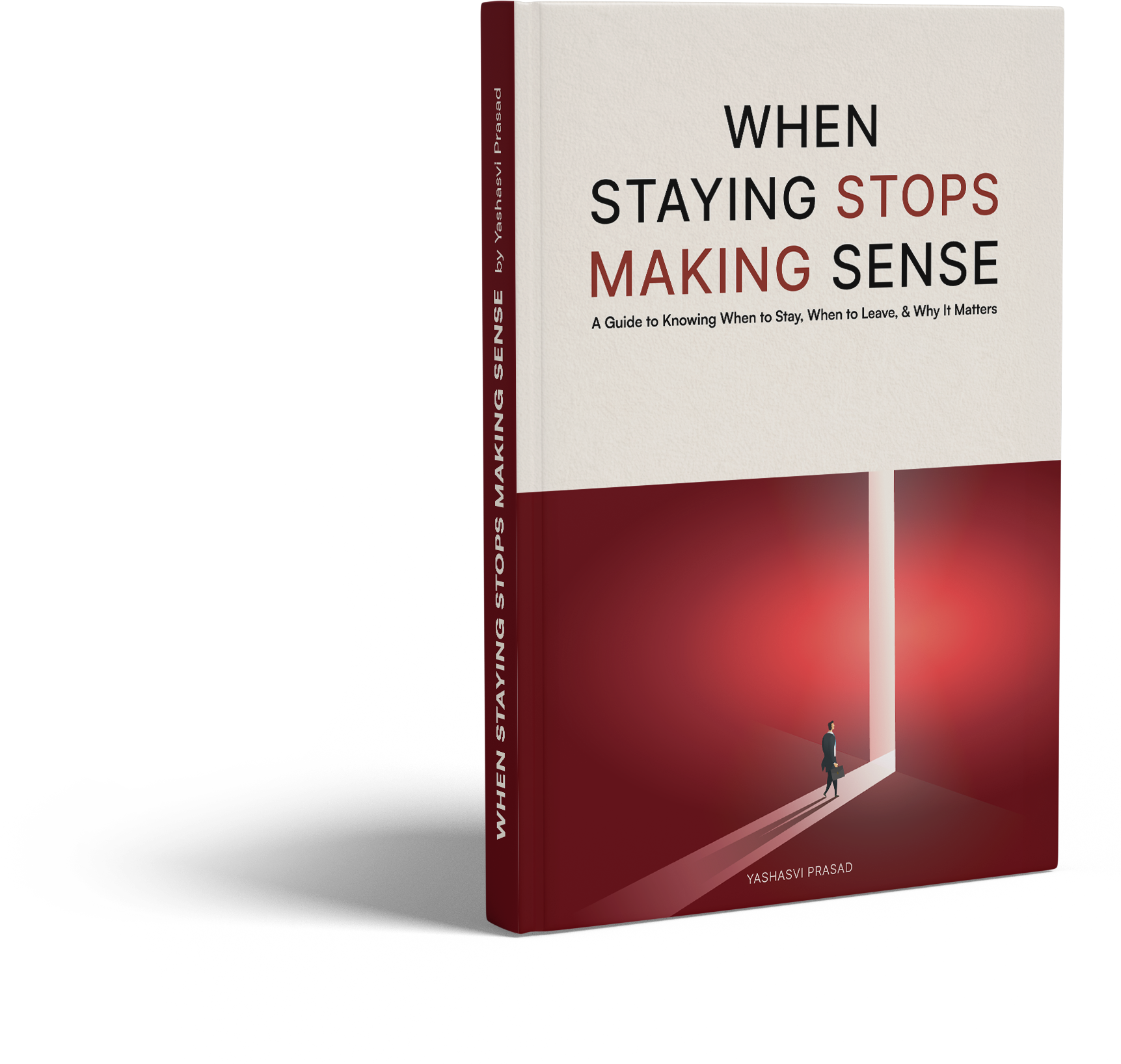
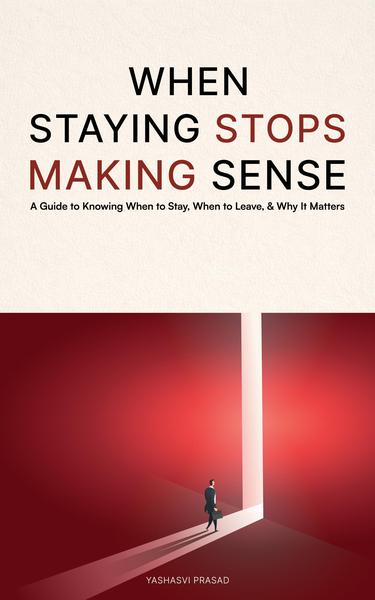
A Guide to knowing when to stay, when to leave & why it matters.




Core Premise:
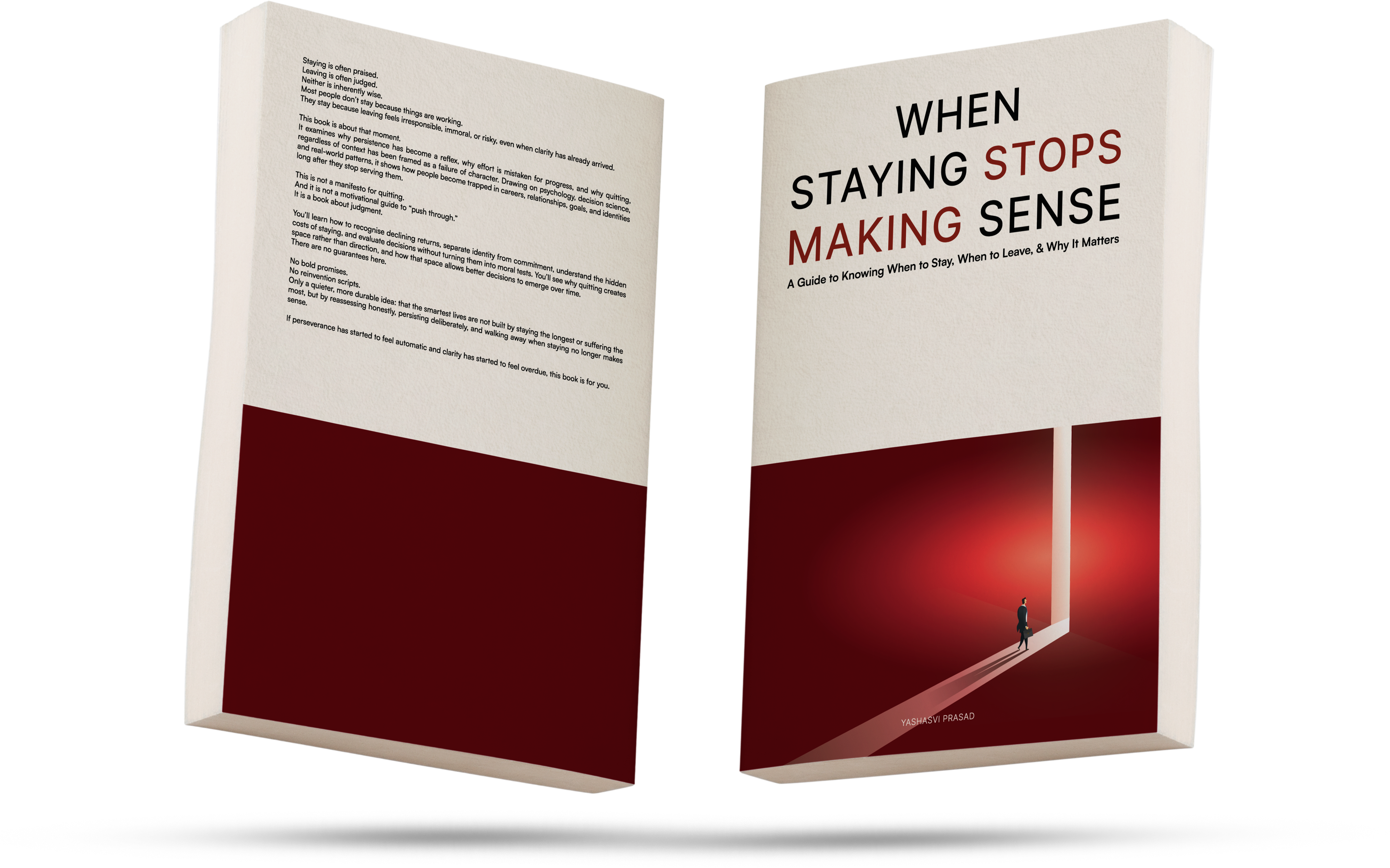
You already know something isn't working. The harder question is why you're still there. Quitting is not an emotional reaction—it is a rational response to changing conditions. This book provides the language, structure, and clarity to decide without guilt or self-betrayal.
The Deep Psychology: Why capable, conscientious people remain stuck long after something has stopped working.
The Science of Timing: Distinguishing between patience and inertia, resilience and self-betrayal.
Practical Frameworks: Tools to evaluate staying versus leaving with clarity and restraint.
Buy the Book
Read an Excerpt:
"Most people don't say, 'I don't want to quit.' They say, 'I can't quit.' That distinction matters. Paralysis is not a personal flaw. The more accurate interpretation is: Multiple constraints are active at once, and the cost of leaving currently outweighs the benefit. That is not a weakness. That is decision-making under pressure."
Formats: Available in Print and eBook.